Canal-Side Drives in Punjab: Routes Worth Planning a Trip Around
 Canal-Side Drives in Punjab: Routes Worth Planning a Trip Around
Where the Sirhind and Bist Doab canals give you an easy half-day behind the wheel, and where to base yourself between Amritsar and Chandigarh.
The Sirhind Canal: Doraha to Ropar
The Sirhind Canal carries the most reliable stretch of waterside tarmac in the state. Start at Doraha on NH-44, about 30 minutes east of Ludhiana, and take the bridge road north across the canal before following the left-bank track towards Ropar. The surface is patchy in places but perfectly drivable in a hatchback. You pass brick kilns, eucalyptus lines and flooded rice fields between June and September, when the canal runs full. Best light is early morning; by 11am in May the plains are punishing. Carry water and snacks, because decent roadside stops thin out after Samrala.
If you want the canal and a genuine sight in the same morning, push on to Ropar Wetland, roughly 55 km from Doraha, and allow two hours there. The road from Morinda to Ropar stays close to the water for long stretches and is quiet on weekdays. I would book a night in Ropar rather than looping back to Ludhiana in the dark; the drive is tiring and the last 20 km have no lighting. Avoid the route during the wheat harvest in April, when tractor traffic and grain trolleys slow everything to a crawl.
The Bist Doab and Beas Belt
Between Jalandhar and Kapurthala the Bist Doab canal system runs almost parallel to the Jalandhar–Ferozepur road, and the little bridges at Kartarpur and Nadala give access to farm tracks that follow the embankment. This is flat, green, and very typical Doaba countryside — sugar cane, poplar and tube wells. The tracks are narrow and unmarked, so treat them as a slow amble rather than a route. From Kartarpur it is about 20 km to Kapurthala, worth an hour for the Moorish-style Jagatjit Palace exterior and the gurdwara at Sultanpur Lodhi a further 25 km on.
North of Jalandhar, the Beas river is a better focus than any canal. The bridge on the Jalandhar–Amritsar road at Beas town is busy, but the quieter crossing near Sri Hargobindpur, reached via Kartarpur, gives you sandbanks and river views with almost no traffic. Distances are short — Jalandhar to Beas town is around 20 km, barely half an hour — so this works as a relaxed afternoon. Avoid the monsoon months of July and August on farm tracks; the black cotton soil turns to grease and even a short detour can bog down a two-wheel-drive car.
Around Amritsar and the Harike Headworks
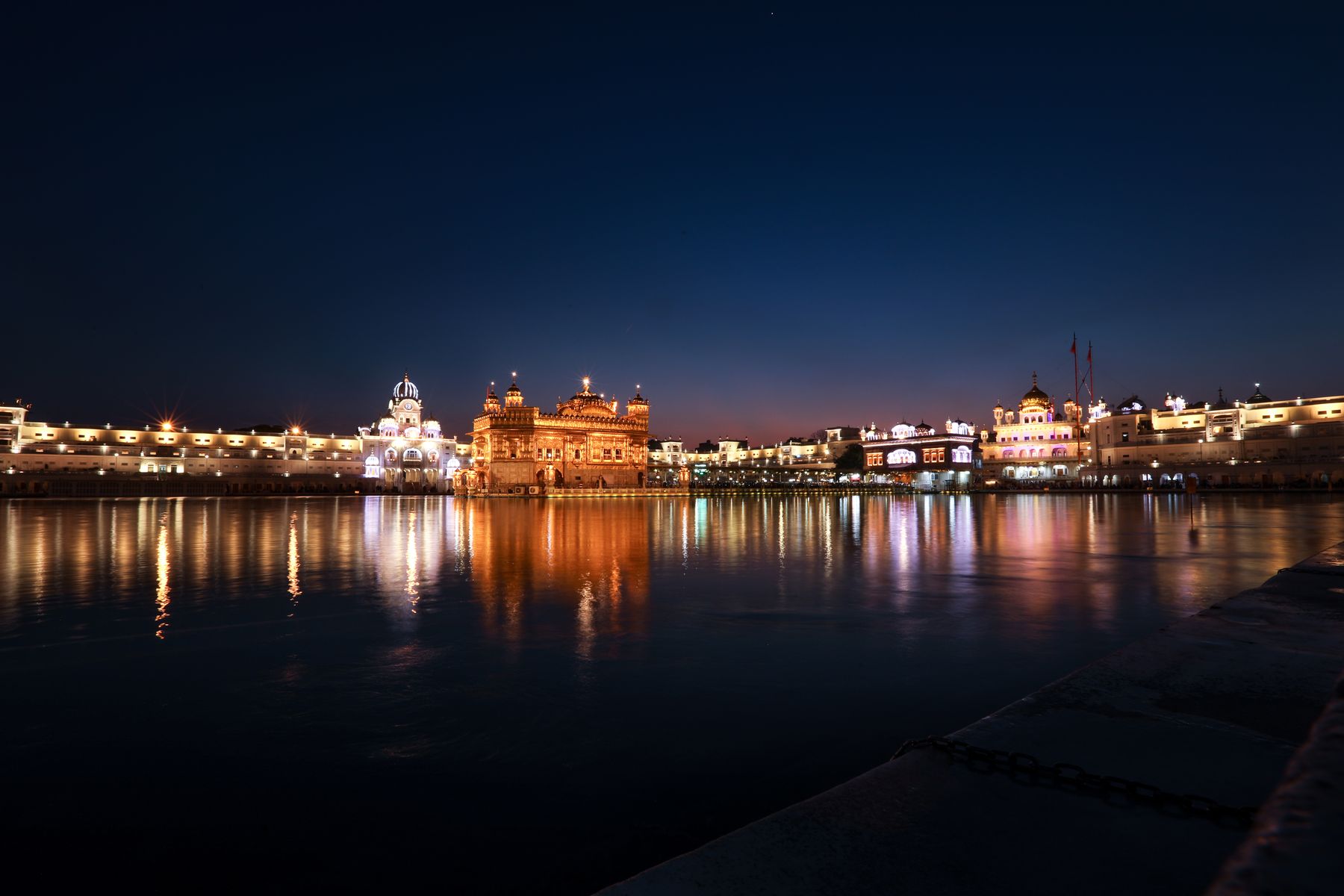
Amritsar is where most bookings land, and rightly so: it is the natural western base for the canal country. The guru ka bagh area and the roads running east towards Tarn Taran are pure flat rural Punjab, and the canal offshoots near Chogawan give you the water without the highway. Allow 45 minutes from the Golden Temple to Tarn Taran, a further 40 minutes to Harike, where the Beas and Sutlej meet. Harike Wetland is a genuine highlight between November and February, when migratory birds arrive; the viewing is best in the two hours after sunrise.
Honest advice: the drive from Amritsar to Harike is not scenic the whole way, and the last stretch on the Ferozepur road is ordinary. Go for the wetland, not the road. The same is true of the canal road south from Amritsar towards Ramdas — pleasant, but not worth a dedicated day. Use Amritsar as your base for three or four nights, and take one morning out to Harike. For the Sirhind Canal section, base at Chandigarh instead; it is roughly 45 minutes to Ropar via the Kharar road, and the city gives you far better hotel choice and evening food than any canal-side town.
Costs, Timing and Which Base to Book
Fuel is the main expense: a Doraha–Ropar loop is about 110 km round trip, and Amritsar–Harike is around 130 km there and back. Budget hotel stays in Punjab generally fall into a broad mid-range band, with Chandigarh and Amritsar at the top of it and smaller towns like Ropar or Kapurthala cheaper for equivalent comfort. There is no entrance fee on most of these roads and no toll on the minor routes. Rent a car with a driver if you are not used to Indian rural roads — the canal tracks have unmarked culverts and stray cattle are common at dusk.
October to March is the window I would choose: cool mornings, full canals after the monsoon, and the Harike bird season overlapping December and January. Skip May and June entirely; the plains hit punishing temperatures and the canal roads offer no shade. If you only have two nights, book Amritsar and do Harike plus the city. With four nights, split between Amritsar and Chandigarh and add the Ropar stretch. What I would skip is the long highway run between Amritsar and Chandigarh purely for canal scenery — take the train or a flight for that leg and spend the saved hours on the water.
Before you book
The questions people ask about Amritsar, answered with this month’s numbers.
No. The main canal embankments and bridges are passable in an ordinary hatchback or sedan. Farm tracks off the embankment are the exception, especially after rain, when a higher-clearance vehicle helps. A driver familiar with the area is more useful than four-wheel drive.
October to March gives cool mornings and full canals after the monsoon. December and January overlap the migratory bird season at Harike Wetland, which is the standout stop. Avoid May and June for heat, and July and August for slippery unsurfaced tracks.
Amritsar for Harike and the Tarn Taran countryside, with three or four nights giving you both city and wetland. Choose Chandigarh if the Sirhind Canal and Ropar Wetland are your priority; it is about 45 minutes to Ropar and has the widest hotel choice.